ThredUp vs Poshmark: Which Should You Sell On?

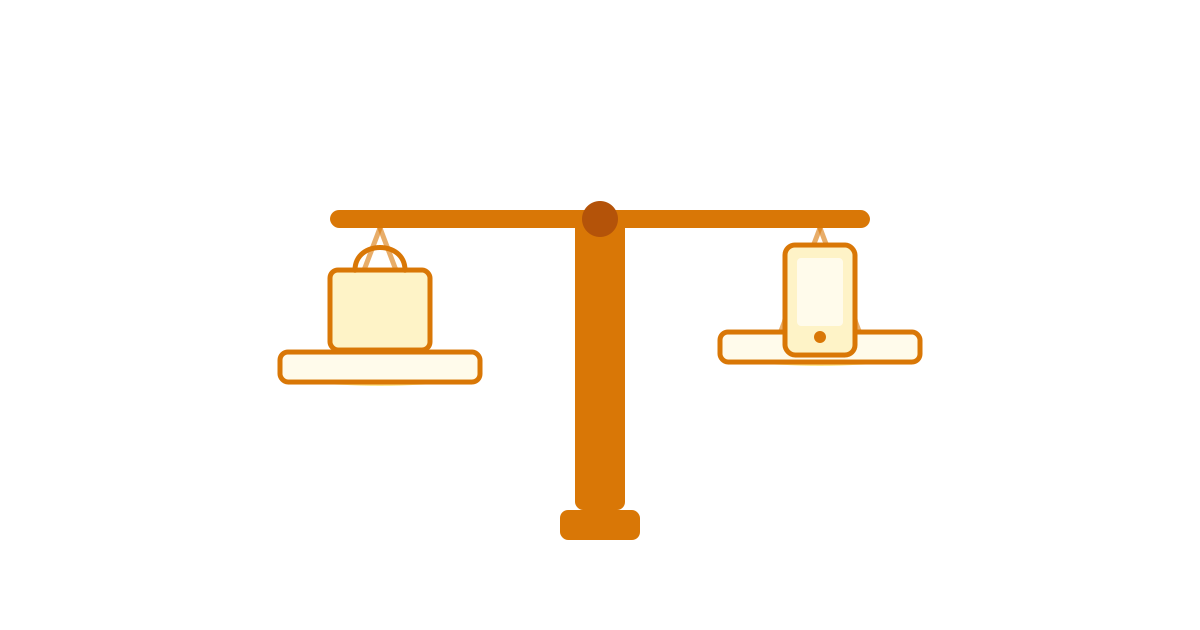
Short answer: Understanding the audience and fee differences between ThredUp and Poshmark is essential for maximizing profits. ThredUp favors volume and convenience; Poshmark favors control and better margins on mid-to-high value items.
Poshmark retains 20% of each sale. ThredUp's commission structure is more complex, and for lower-priced items, significantly more aggressive. According to ThredUp's current fee structure, commissions on items under $20 can run as high as 95%, meaning you might receive as little as $1 to $3 on a $20 sale. On items over $500, ThredUp's commission drops to around 5%, making it genuinely competitive for high-value pieces. Poshmark stays at a flat 20% regardless.
That single fee difference should drive most of your decision for a given item.
The comparison breakdown
| ThredUp | Poshmark | |
|---|---|---|
| Model | Consignment: you ship, they list | Peer-to-peer: you list and ship |
| Fee on $20 item | 80 to 95% (you get $1 to $4) | 20% (you get $16) |
| Fee on $100 item | 40 to 60% (you get $40 to $60) | 20% (you get $80) |
| Fee on $500+ item | ~5% (you get $475+) | 20% (you get $400) |
| Effort required | Very low: pack a bag and ship | High: photos, listing, negotiating, shipping |
| Turnaround time | Weeks to months | Days to weeks depending on pricing |
| Item rejection | Common; they reject items that won't sell | None; you decide what lists |
| Buyer audience | Mainstream contemporary women's | Broader; strong for activewear and contemporary |
| Best for | Clearing closet clutter fast, high-end pieces | Sellers who want to maximize per-item return |
When ThredUp makes sense
ThredUp's model only pays off in specific scenarios:
- High-value items ($200 and up): At this price point, their lower commission rate on premium items becomes competitive with Poshmark's flat 20%, and you get their authentication credibility with buyers.
- Mass closet cleanouts: If you have 50 items worth $5 to $15 each, listing them individually on Poshmark is hours of work for modest returns. Packing one Clean Out Kit and moving on might net you less per item but more per hour of effort.
- Items that require brand trust to sell: ThredUp's buyers are often more comfortable paying $80 for a piece they haven't inspected because ThredUp's quality control is baked in. Some pieces sell faster on ThredUp than they would sitting in a Poshmark closet.
When Poshmark makes sense
Poshmark's economics are better for almost any item above $30 where you're willing to put in the listing work:
- Mid-value items ($30 to $150): This is where Poshmark's flat 20% creates a meaningful advantage. A $60 dress nets you $48 on Poshmark. On ThredUp it might net you $15 to $25.
- Brand-driven or niche pieces: Poshmark's search and community are good at surfacing the right buyer for specific items. A lululemon Define jacket or a Patagonia fleece has a ready audience on Poshmark that will find it, check current cross-platform Patagonia Better Sweater resale prices before you set your listing price so you're not underselling it.
- Anything you want control over: ThredUp can reject your items, price them below what you'd accept, or hold inventory for months. Poshmark keeps you in control.
The practical decision
For most sellers, the answer is both; but with intent. Send ThredUp the items that aren't worth your time to photograph and list individually: fast fashion basics, lower-priced pieces, anything you want gone quickly. List on Poshmark anything with real resale value where a 20% fee is clearly better than a 60 to 80% fee.
Don't send ThredUp items worth $40 to $100 just because it's easier. The math doesn't work. Run the numbers before you pack the bag.
If you're cross-listing on Poshmark, you can also search across Depop, Grailed, Mercari, and eBay simultaneously. Crawli pulls all of them into one view so you can price against real comps before you list.