Best Sites to Sell Luxury Clothing: Lowest Fees

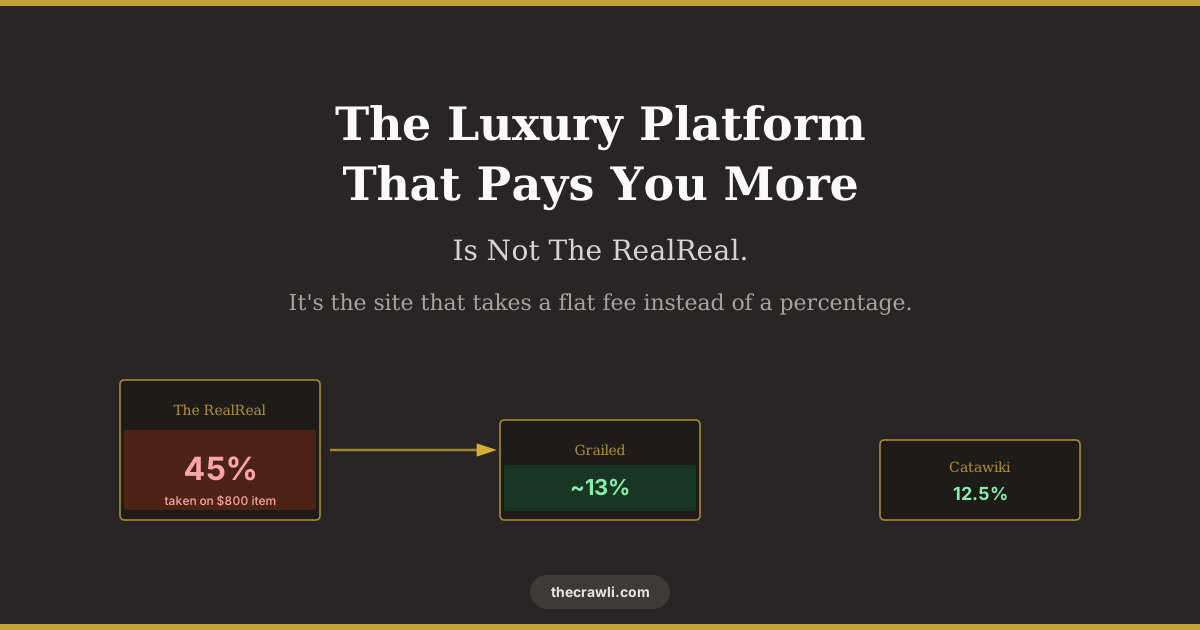
Short answer: For luxury items priced above $1,000, platforms that charge a flat fee or tiered commission rather than a percentage can net sellers hundreds more per sale, and lesser-known options like Catawiki, Grailed, and specialty consignment sites often outperform The RealReal in seller payout. On high-ticket items, the math is not close.
The RealReal takes up to 45% of the sale price on clothing items in the $200 to $999 range, which is the most common price band for designer garments on the platform. Grailed charges a flat 9% commission plus approximately 3.5% in payment processing, meaning a seller keeps approximately 87 cents of every dollar rather than 55 cents. On a $800 sale, that difference is $256.
Most resellers never do the math. They list on The RealReal because the brand is the category-defining name, the authentication and photography are handled for them, and the audience is theoretically pre-qualified for luxury. All of those are real advantages. They just cost money.
Breaking Down the Fee Structures
Understanding platform fees requires looking at the total extraction, not just the headline commission rate.
The RealReal uses a tiered consignment structure. For clothing and accessories: sellers receive 20% of sale price for items under $100, 55% for items between $200 and $999, 65% for items between $1,000 and $1,999, and up to 70% for items above $5,000. The RealReal handles authentication, photography, pricing, and buyer disputes, which has real operational value but comes at a cost. The platform's RealReal Rewards loyalty programme allows high-volume sellers to access better commission tiers over time.
Grailed charges a flat 9% commission on every sale across all categories. Payment processing through Stripe adds approximately 3.49% plus $0.49 for domestic US sellers with Stripe onboarding. Total effective fees for most domestic sellers run 12.5% to 13.5% per transaction. Grailed does no authentication or photography: you handle both. The buyer base skews male and hypebeast-adjacent, which matters for certain categories.
Vestiaire Collective operates a direct shipping option where sellers send items directly to buyers without going through Vestiaire's authentication hub. Direct shipping carries a lower seller fee than the standard authentication path. For high-value items above a threshold, authentication is mandatory and adds processing time. Fee structures vary by region and item category, so verifying current rates before listing is advisable.
Poshmark charges a flat 20% on all sales above $15. There are no exceptions or tiers. On a $500 sale, Poshmark takes $100. For luxury items, this is a poor structure compared to the alternatives.
Depop charges a 10% commission plus payment processing. Like Grailed, no authentication or photography is provided.
Five Platforms The RealReal Sellers Overlook
Catawiki. The Dutch auction platform is the best-kept secret in European luxury resale. Catawiki's fee structure for sellers is 12.5% plus a small listing fee, making it competitive with Grailed on commission. The auction format is the differentiator: an exceptional piece with two or more committed bidders will exceed estimate in ways that are impossible on a fixed-price platform. Catawiki's buyer base is European and collector-oriented, which is particularly valuable for pieces with provenance, limited editions, and archive status. The platform handles item photography for select categories. Seller payouts typically take longer than Grailed or Poshmark because of the auction cycle.
Grailed. For designer menswear and unisex pieces in the $300 to $3,000 range, Grailed's flat 9% fee and its dedicated fashion-educated buyer base make it the highest-return platform for most transactions in this category. The buyer base actively seeks archive pieces, early-era labels, and runway items that command premiums unavailable on broader platforms. Presentation matters significantly on Grailed: detailed, knowledgeable descriptions with clear era identification and fabric notes convert at much higher rates than generic listings.
Vestiaire Collective (direct shipping tier). Vestiaire's direct shipping option reduces fees compared to the full authentication path, while still giving sellers access to a global luxury-focused buyer base. For sellers who can credibly represent their items with detailed photographs and clear provenance information, the direct path returns more than the standard consignment route on many item types.
Specialist consignment. For specific categories, specialist consignment houses return more than any generalist platform. A vintage Hermes scarf with clear documentation will almost always do better at a specialist vintage Hermes consignor than on The RealReal, because the specialist audience is deeper and more willing to pay premium prices for quality provenance. The same logic applies to specific bag families, watch brands, and archive fashion pieces. The tradeoff is slower sale cycles and the effort of identifying and approaching the right specialist.
Rebag (for handbags). Rebag offers instant purchase quotes for luxury handbags, which trades potential upside for certainty and speed. For sellers who need liquidity rather than maximum return, Rebag's quote is worth benchmarking against the anticipated net from a Vestiaire or RealReal listing after fees and the expected time to sale.
Platform Culture and Presentation
Getting the fee structure right is necessary but not sufficient. Each platform has an unwritten presentation standard that determines whether a listing converts.
On Grailed, buyers expect knowledgeable descriptions that demonstrate the seller understands what they have. Describe the era, the specific collection or season if known, the fabric and construction details, the measurements, and the condition with precision. A listing that reads like it was written by a specialist will outperform an identical piece listed generically.
On Catawiki, auction descriptions follow a more formal, object-description convention closer to auction house cataloguing. Include all provenance information, any receipts or documentation, the exact condition with honest notation of any defects, and measurements. Photographs should be clean and well-lit rather than editorially styled.
On Vestiaire, the buyer base responds to clear authentication signals: original dust bags, boxes, authenticity cards, and purchase receipts all add value and reduce buyer hesitation. Photograph these items alongside the piece.
Buying rather than selling? The calculus flips: see the best secondhand luxury marketplaces ranked for buyers.
Before you list anywhere, Crawli can show you where the same bag or jacket is selling and at what price by pulling live listings from multiple marketplaces at once, so you can list on the platform that actually pays rather than defaulting to the one with the biggest name.